Once you’ve settled on a PEB shed for your project, one of the next real decisions is what to clad it with. Plain galvanized sheeting is the default, economical option — but for a growing number of projects in Pakistan, especially anything involving temperature-sensitive storage, food, pharmaceuticals, or textiles, insulated sandwich panels have become the standard choice instead.
This guide covers what sandwich panels actually are, how they compare to plain sheeting, and how to decide whether the added cost is worth it for your specific project.
What Is a Sandwich Panel?
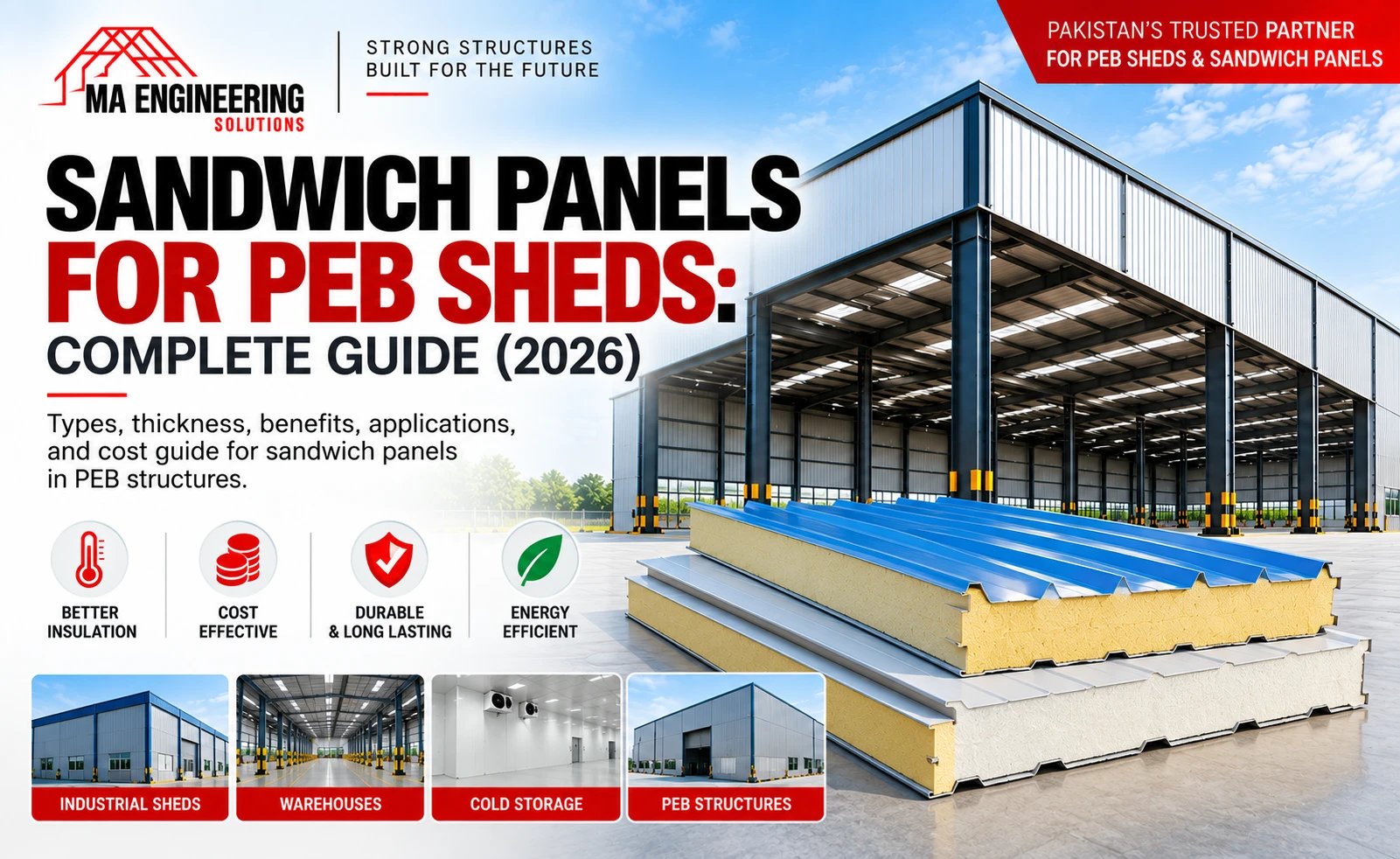
A sandwich panel is a composite building material made of three layers: two outer metal skins — typically pre-painted galvanized steel — with a rigid insulating core sandwiched between them, most commonly polyurethane (PU), polystyrene (EPS), or rock wool. The metal skins provide structural rigidity and weather resistance, while the core provides thermal insulation, and in some cases, additional fire resistance or acoustic dampening.
Unlike plain sheeting, which is a single layer of profiled metal, a sandwich panel functions as both the structural cladding and the insulation layer in one component — which is part of why it’s become popular for PEB construction, where reducing the number of separate building layers speeds up installation.
Common Core Materials and What They’re Used For
Polyurethane (PU) Core
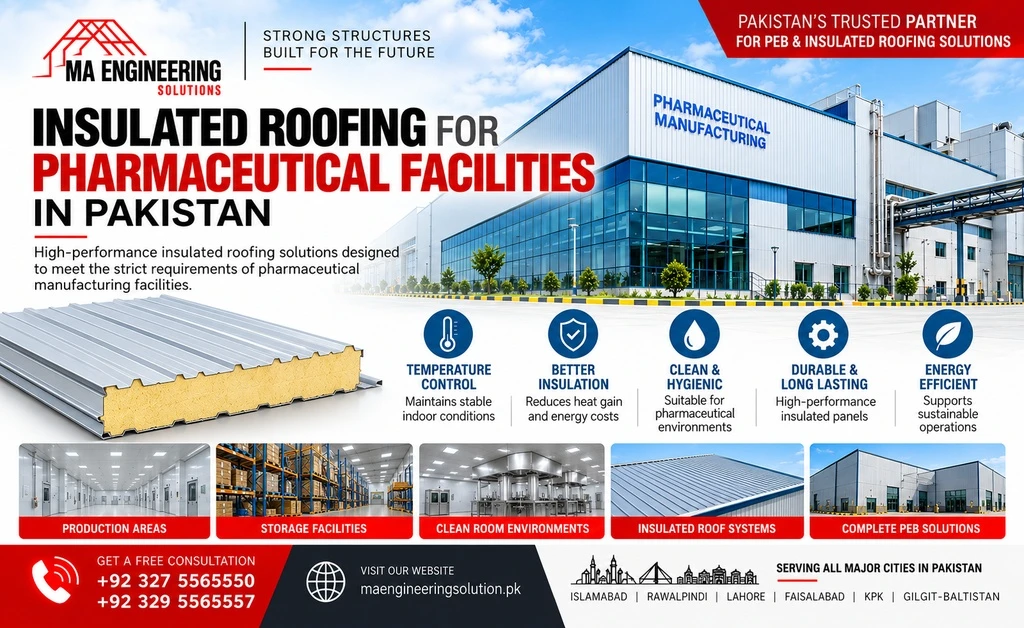
PU-core panels offer the strongest thermal insulation per unit thickness of the common core types, which makes them a common choice for cold storage, pharmaceutical, and food-processing facilities where tight temperature control matters most.
Expanded Polystyrene (EPS) Core
EPS-core panels are generally more economical than PU while still offering solid insulation performance, making them a common middle-ground choice for general industrial and warehouse applications where extreme thermal performance isn’t the top priority.
Rock Wool (Mineral Wool) Core
Rock wool panels are chosen primarily for fire resistance and acoustic insulation, which makes them relevant for facilities with higher fire-safety requirements or where noise control matters — such as textile sheds with heavy machinery.
Sandwich Panels vs Plain Metal Sheeting
| Factor | Sandwich Panels | Plain Metal Sheeting |
|---|---|---|
| Thermal insulation | Built-in, significantly reduces heat transfer | Minimal — heat passes through easily |
| Installation speed | Faster in some cases — combines structure and insulation in one layer | Fast, but needs separate insulation layer if required |
| Upfront cost | Higher per square foot | Lower per square foot |
| Energy efficiency | Reduces cooling/heating load significantly | Little to no impact on internal temperature control |
| Condensation control | Better — reduces interior condensation buildup | More prone to condensation without added insulation |
| Acoustic performance | Better sound dampening, especially with rock wool core | Minimal acoustic benefit |
| Best suited for | Cold storage, pharma, food processing, offices within sheds | Dry storage, general warehousing without climate sensitivity |
When Sandwich Panels Are Worth the Extra Cost
Temperature-Sensitive Storage or Production
If you’re storing or producing anything sensitive to heat — pharmaceuticals, packaged food, certain chemicals — the insulation reduces both product risk and the ongoing cost of active cooling. This is a major reason sandwich panels are common in pharmaceutical sheds and chemical plant sheds.
Facilities With Occupied Office or Work Space
If part of your shed includes office space or areas where staff work for extended periods, insulation directly affects comfort and can meaningfully reduce cooling costs in Pakistan’s summer months.
High-Value or Climate-Sensitive Inventory
For warehousing goods that degrade or lose value with heat exposure, the insulation cost is often small relative to the value of the inventory it protects.
Facilities Needing Noise Control
Rock wool sandwich panels specifically help dampen sound — relevant for manufacturing floors with heavy machinery where noise control affects worker conditions or nearby operations.
When Plain Sheeting Is the More Practical Choice
Plain metal sheeting remains the right call for a large share of projects — mainly dry storage warehouse sheds where temperature control isn’t operationally critical, budget-sensitive projects where the primary goal is maximum covered area at minimum cost, and structures used for light storage, workshops, or vehicle parking where climate control offers little practical benefit.
There’s no inherent downside to choosing plain sheeting for the right application — the goal is matching the cladding to what the building actually needs, not defaulting to the more expensive option out of caution.
Panel Thickness and Performance
Sandwich panel performance is affected by core thickness — thicker panels generally provide better insulation, but at higher material cost and (in some cases) additional structural support requirements. The right thickness depends on your climate exposure, temperature-control targets, and budget, which is why panel specification should be part of your structural design conversation with your PEB contractor, not a decision made independently after the steel structure is already finalized.
Installation Considerations
Sandwich panels are typically installed as a single combined layer, fixed directly to the secondary steel framing (purlins and girts). A few things worth confirming with your contractor before installation:
- Sealing at joints and openings — poor sealing undermines the insulation value and can allow moisture ingress over time
- Fire-rating requirements for your specific use case, particularly relevant for rock wool vs PU core selection
- Panel orientation and fixing method, which affects both weatherproofing and finished appearance
Frequently Asked Questions
Talk to Our Engineering Team
Choosing the right cladding depends on your building’s use case, budget, and climate exposure. Share your project details with our team and we’ll recommend the option that actually fits — insulated or plain — rather than defaulting to whichever is easier to quote.
Related reading: PEB Structures · PEB Shed Cost Per Square Foot in Pakistan · PEB Shed vs RCC Construction · Pharmaceutical Sheds · Chemical Plant Sheds · Warehouse Sheds