akistan’s pre-engineered building (PEB) industry has grown quickly over the past decade, driven by rising demand for warehouses, factory sheds, and industrial buildings across Lahore, Karachi, Faisalabad, and other manufacturing hubs. More suppliers now compete in this space — which is good for buyers on price and choice, but makes it harder to tell a genuinely capable manufacturer from one reselling someone else’s fabrication behind a polished website.
The best PEB manufacturers in Pakistan share a few consistent traits: they design and fabricate steel structures in-house, install with their own erection crews instead of subcontractors, provide itemized rather than bundled quotes, and can show verifiable project experience across sectors like warehousing, textiles, and pharmaceuticals. This guide walks through exactly what to check before choosing one — and where MA Engineering Solutions fits against those criteria.
What Is a Pre-Engineered Building (PEB)?
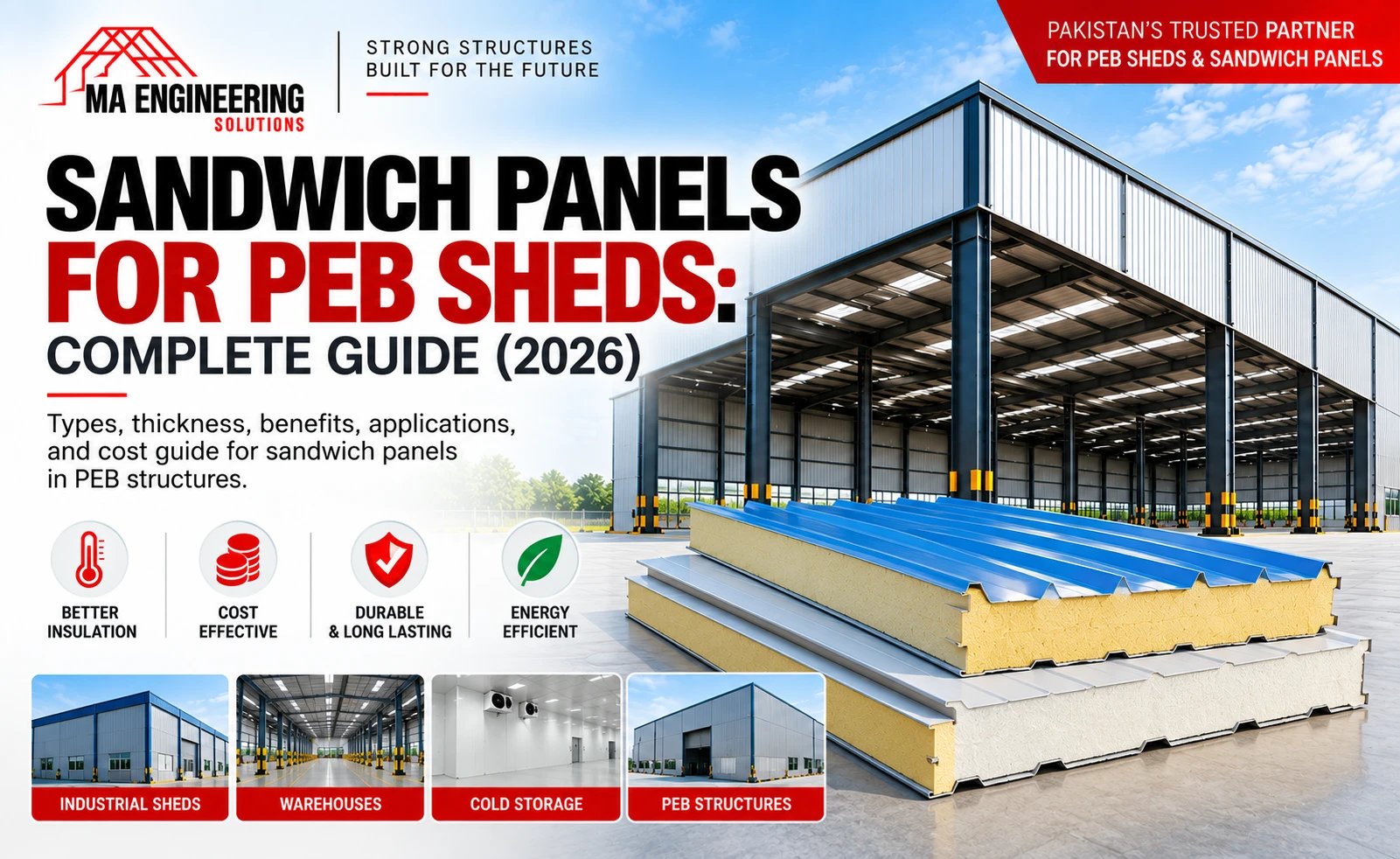
A pre-engineered building is a steel structure whose main components — columns, rafters, purlins, girts, and bracing — are designed and fabricated in a factory, then transported and assembled on-site. This differs from conventional construction, where most fabrication happens directly on location.
PEB construction has become the standard approach for warehouses, industrial sheds, and other large clear-span buildings, mainly because it’s faster to erect and more material-efficient than conventional steel or reinforced concrete (RCC) construction. For a fuller breakdown of how the two compare, see our guide on PEB structures.
What Separates a Good PEB Manufacturer From the Rest
In-House Design and Fabrication
The strongest manufacturers handle structural engineering and steel fabrication themselves, rather than outsourcing to third-party shops. This means tighter control over tolerances, welding standards, and material specification — and one accountable team, not several disconnected vendors passing the project between them.
Their Own Erection Crews
Good design only matters if the final assembly matches it. A manufacturer that installs what it fabricates — instead of handing that job to subcontracted labor with no real stake in the engineering — tends to be more accountable for how the finished building actually performs.
Experience Across Sectors
Warehousing, textile manufacturing, pharmaceuticals, dairy, and cold storage each come with different structural, ventilation, and compliance demands. A manufacturer with genuine experience across these — rather than one template resized for every client — is better positioned to design around your actual requirements instead of forcing a generic layout to fit.
Transparent, Itemized Quoting
A trustworthy supplier breaks a quote into structural steel, roof and wall cladding, accessories, and installation, rather than handing over a single bundled number that’s hard to compare against competing quotes. Bundled pricing often hides where corners were cut.
A Verifiable Track Record
A specific founding date, completed project count, or named engineering leadership are all easier to check than vague claims like “trusted nationwide” with nothing behind them.
Realistic Delivery Capability
Because PEB components are fabricated off-site and transported for assembly, what actually matters is a manufacturer’s real logistics capability for your city — not a blanket “we serve all of Pakistan” claim on a homepage. Ask specifically about delivery timelines to your site.
Load Design for Your Actual Location
A capable manufacturer designs to your local wind and seismic conditions rather than a generic national average, which affects both safety and how the structure holds up over time.
How to Read a PEB Manufacturer’s Website Before You Call
A few things worth checking before you even pick up the phone:
- Is there a real, visible fabrication facility — not just a registered office address?
- Are project photos tied to identifiable locations, or do they look like stock or rendered imagery?
- Is the service breakdown clear (design, fabrication, installation), or is it vague “end-to-end solutions” language?
- How quickly and specifically do they respond to a first inquiry? That often reflects how they’ll handle the rest of your project.
Where MA Engineering Solutions Fits
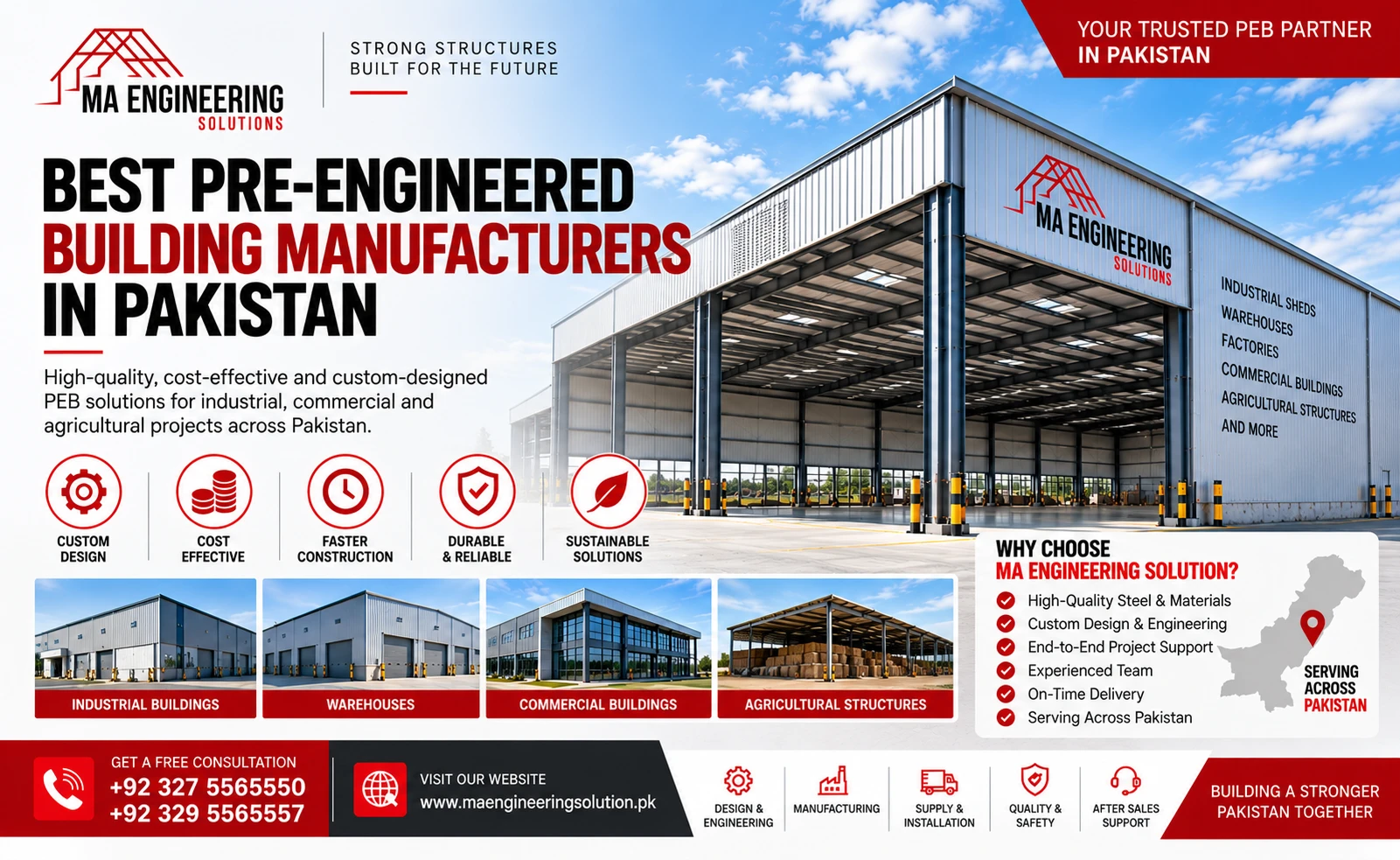
MA Engineering Solutions is a Lahore-based PEB manufacturer offering in-house design, fabrication, and installation — the same team that engineers your structure also builds and erects it, without handing pieces off between disconnected subcontractors. Sector experience includes:
- Warehouse sheds — wide clear-span structures for racking, logistics, and fulfillment
- Industrial sheds and factory sheds — engineered for heavy machinery loads and manufacturing floors
- Textile sheds — designed for airflow control and dust protection around looms and fabric processing
- Chemical plant sheds — corrosion-resistant construction to industrial safety standards
- Pharmaceutical sheds — sanitation-ready, temperature-controlled environments
- Dairy and agriculture sheds — bio-secure, well-ventilated structures for livestock and produce
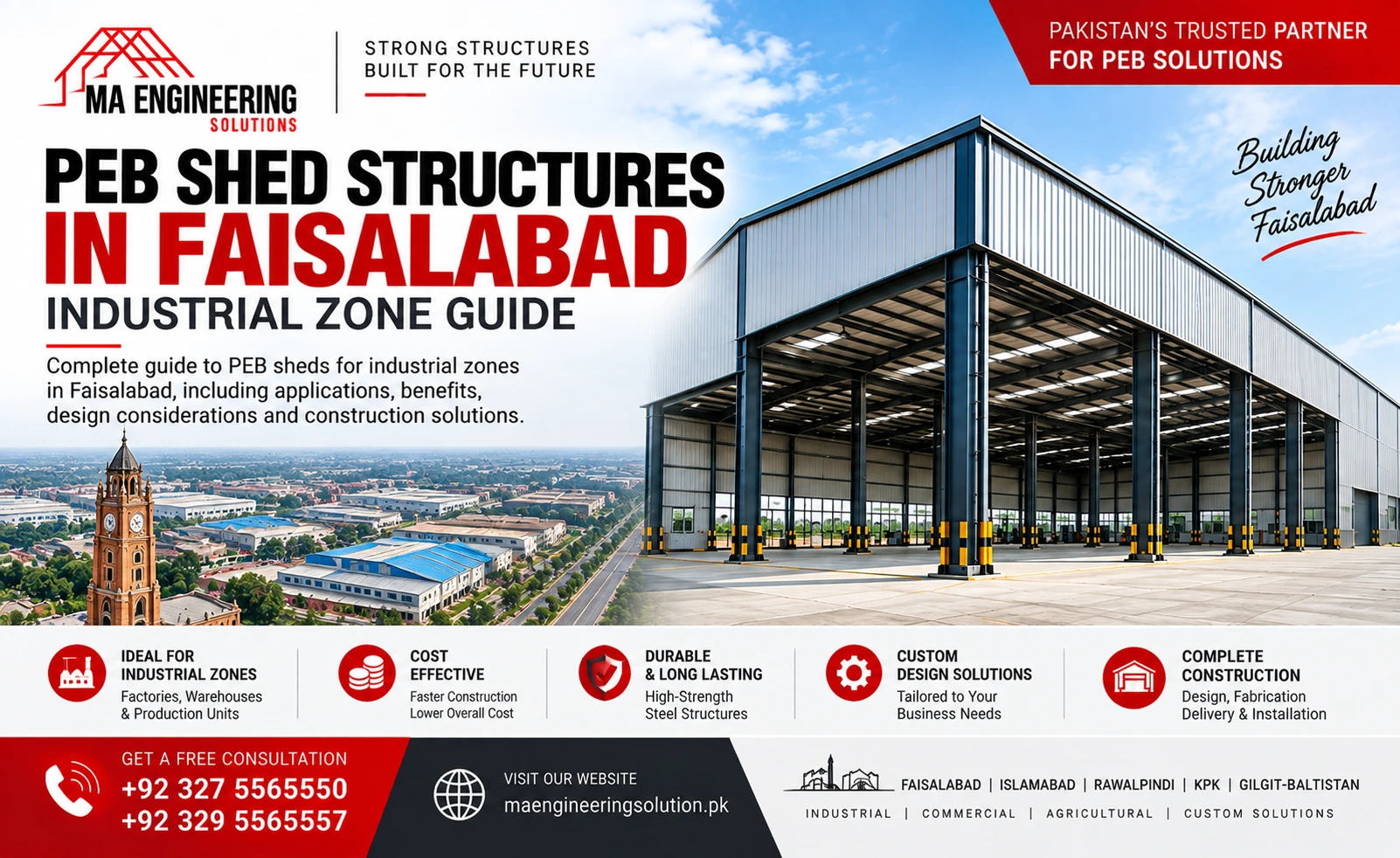
Project support covers Lahore, Islamabad, Rawalpindi, Faisalabad, and other industrial centers, with delivery logistics assessed per site rather than assumed as a flat capability.
Questions Worth Asking Before You Choose
- Do you design and fabricate the steel structure in-house, or outsource any part of it?
- Who physically installs the structure — your own crew or a subcontractor?
- Can you show photos or references from a project similar in scale and use to mine?
- Will the quote separate structural steel, cladding, accessories, and installation?
- What’s the realistic timeline from approved drawings to handover?
- How are mid-project design changes handled, and what do they typically cost?
- What wind and seismic standards do you design to for my specific location?
A manufacturer that answers these specifically — instead of deflecting to general reassurances — is usually the safer choice.
PEB Manufacturer vs General Contractor
A PEB manufacturer designs and fabricates the steel structure itself, often installing it too, and specializes specifically in pre-engineered building systems. A general contractor manages a broader construction project and may subcontract the steel fabrication and erection to a manufacturer like this. If your project is primarily a steel structure — a warehouse, factory, or industrial shed — working directly with a PEB manufacturer usually means fewer intermediaries and clearer accountability.
Frequently Asked Questions
Get a Quote From Our Engineering Team
If you’re comparing PEB manufacturers for an upcoming project, the fastest way to evaluate fit is a direct conversation about your span, height, sector, and timeline requirements.